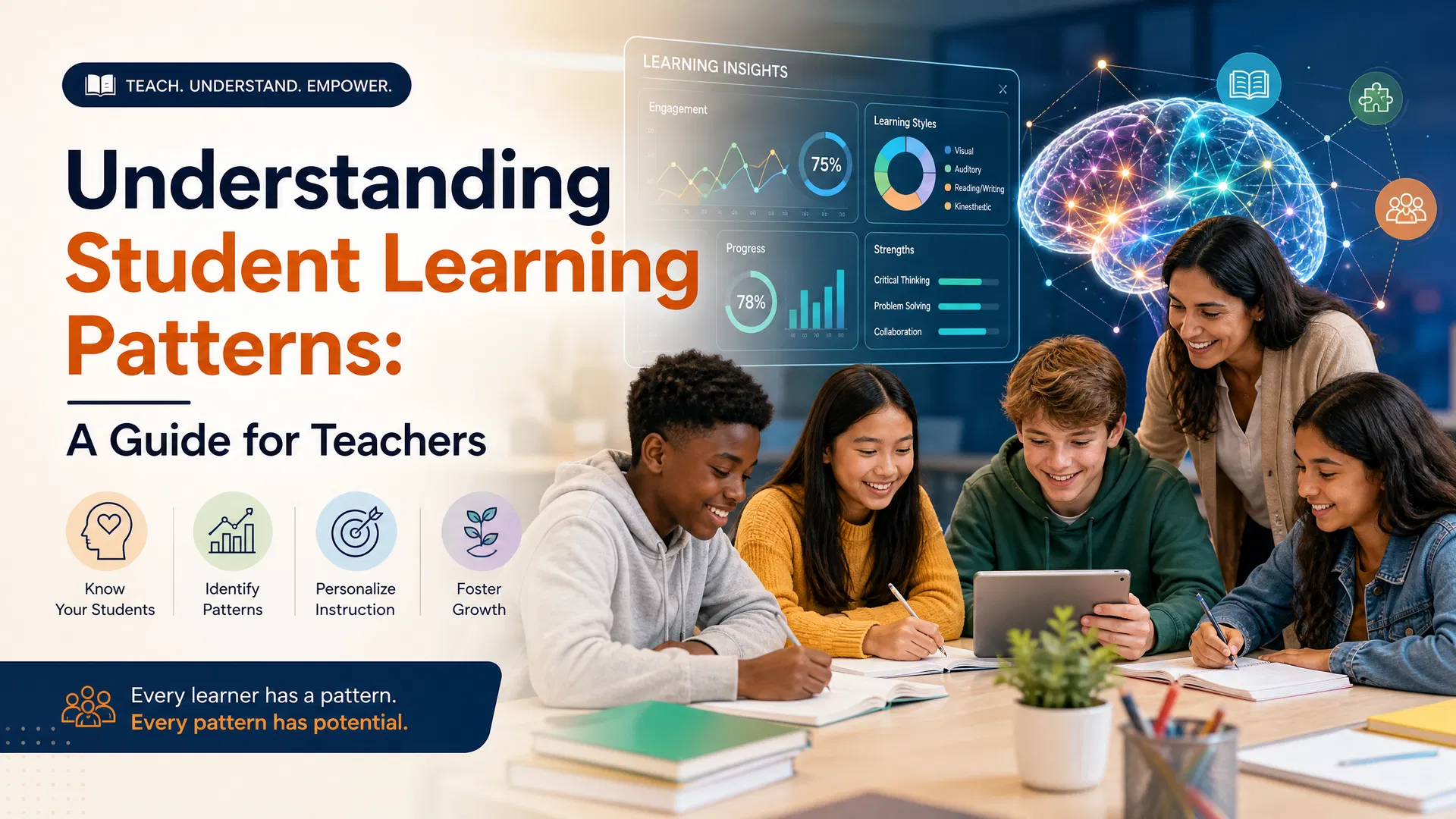
Understanding Student Learning Patterns
Every student learns differently. Some students grasp concepts immediately through explanation, while others need to see visual representations or engage in hands-on practice. Traditional classroom instruction often adopts a one-size-fits-all approach, which can leave many students behind.
The solution is not to teach harder or assign more homework; instead, it's essential to understand each student's unique learning pattern and tailor instruction accordingly. This article explores what learning patterns are, how to identify them, and how to use this understanding to improve student outcomes.
What Are Learning Patterns?
Learning patterns are the consistent ways in which individual students process information, engage with content, and demonstrate understanding. They arise from the interplay of cognitive abilities, learning preferences, prior knowledge, motivation, and metacognitive strategies.
While learning patterns are related to learning styles—such as visual, auditory, and kinesthetic—they encompass a broader scope. Learning patterns include how students approach problems, the strategies they employ, their responses to challenges, and their processes for consolidating new knowledge.
Understanding learning patterns allows teachers to anticipate which students may struggle with particular concepts, provide targeted support, and design instruction that aligns with how students learn best. This approach not only increases engagement but also fosters motivation among students.
Components of Learning Patterns
Key components of learning patterns include processing speed, problem-solving approaches, and conceptual understanding versus procedural fluency. For instance, some students may excel at quick problem-solving but struggle with deeper understanding, while others may require more time to process information.
Moreover, persistence plays a crucial role in how students handle difficulties. Do they persevere through challenges, or do they tend to give up quickly? Understanding these aspects can help teachers foster a more supportive learning environment.
Another important element is transfer ability—students’ capacity to apply learned concepts in new contexts. Additionally, collaboration preferences and metacognitive awareness significantly impact how students learn and engage with material.
Identifying Student Learning Patterns
Identifying learning patterns can be achieved through various methods. Observing how students approach problems can provide insight; do they dive in or pause to plan? Additionally, assessment analysis can reveal not only whether students arrive at correct answers, but also the strategies they employ in their problem-solving processes.
Engaging students in interviews can also yield valuable information about their learning processes. Asking questions about their study habits and strategies can highlight patterns that may not be immediately visible in their performance alone.
Utilising behavioural data from platforms like StartSprint can further enhance understanding. By analysing response times, confidence indicators, and patterns of correct and incorrect answers, teachers can gain a comprehensive view of student learning profiles.
Using Learning Patterns to Personalise Instruction
Once you've identified students' learning patterns, you can personalise instruction effectively. For example, if a student is a conceptual learner, focus on fostering understanding rather than rote memorisation. Conversely, procedural learners might benefit from structured, step-by-step instructions.
Providing multiple representations of concepts can also facilitate deeper understanding for all students. This includes using visual aids, verbal explanations, and kinesthetic activities to engage different learning preferences.
Additionally, differentiating practice and adjusting pacing according to each student's needs can lead to more effective learning experiences, ensuring that every student has the opportunity to thrive.
Key Takeaway
Understanding student learning patterns is crucial for personalised instruction. By identifying how each student learns best and adapting teaching methods accordingly, teachers can significantly enhance student engagement and outcomes.
Using behavioural intelligence can streamline this process, allowing educators to analyse large amounts of data to tailor instruction effectively. Ultimately, this approach leads to a more dynamic and inclusive classroom environment where every student has the opportunity to succeed.